We tend to think of depression as a purely emotional state, but it has a powerful physical footprint—affecting energy, posture, breath, and the body’s desire to move. The catch? One of the most effective tools for easing depression is movement itself.
Recent research from Harvard Medical School and other institutions has shown that walking just 7,000 steps a day can significantly reduce the risk of developing depression over time. Even 5,000 steps a day has been linked to measurable improvements in mood and reductions in symptoms like fatigue, hopelessness, and low motivation.
Movement works—not as a quick fix, but as a steady signal to the nervous system that change is possible.
At SOMA Movement Studio, we see this every day. Clients arrive to class stiff, withdrawn, or heavy-hearted—and leave standing taller, breathing deeper, and more connected to themselves. That’s not just the magic of Pilates. That’s neurology.
How Movement Impacts Mood
When you exercise, your body releases endorphins—feel-good chemicals that help ease pain and elevate mood. But that’s just the beginning. Movement also:
Improves circulation, which boosts oxygen and nutrient delivery to the brain
Increases BDNF (brain-derived neurotrophic factor), a protein linked to improved neuroplasticity and resilience
Reduces inflammation, a key player in many cases of chronic depression
Reorganizes posture and breath—shifting us out of defensive, collapsed patterns
Supports better sleep and circadian rhythm regulation
Pilates and the Depression Body
Depression doesn’t just feel like sadness. It often feels like compression: rounded shoulders, a collapsed chest, shallow breathing, and a stuck diaphragm. That’s why traditional cardio isn’t the only answer. Mindful movement practices like Pilates work on both the physical posture of depression and the internal coordination patterns that keep us feeling stuck.
Pilates emphasizes:
Core engagement to support the spine and lift the torso
Breath work that expands the ribs and activates the parasympathetic nervous system
Spinal articulation to reintroduce fluidity and freedom into the body
Attention and awareness—inviting you to feel present and embodied
Even a 30-minute Pilates session can restore a sense of internal order and emotional clarity. The movements aren’t frantic. They’re deliberate. They give your body a chance to remember that strength and softness can coexist.
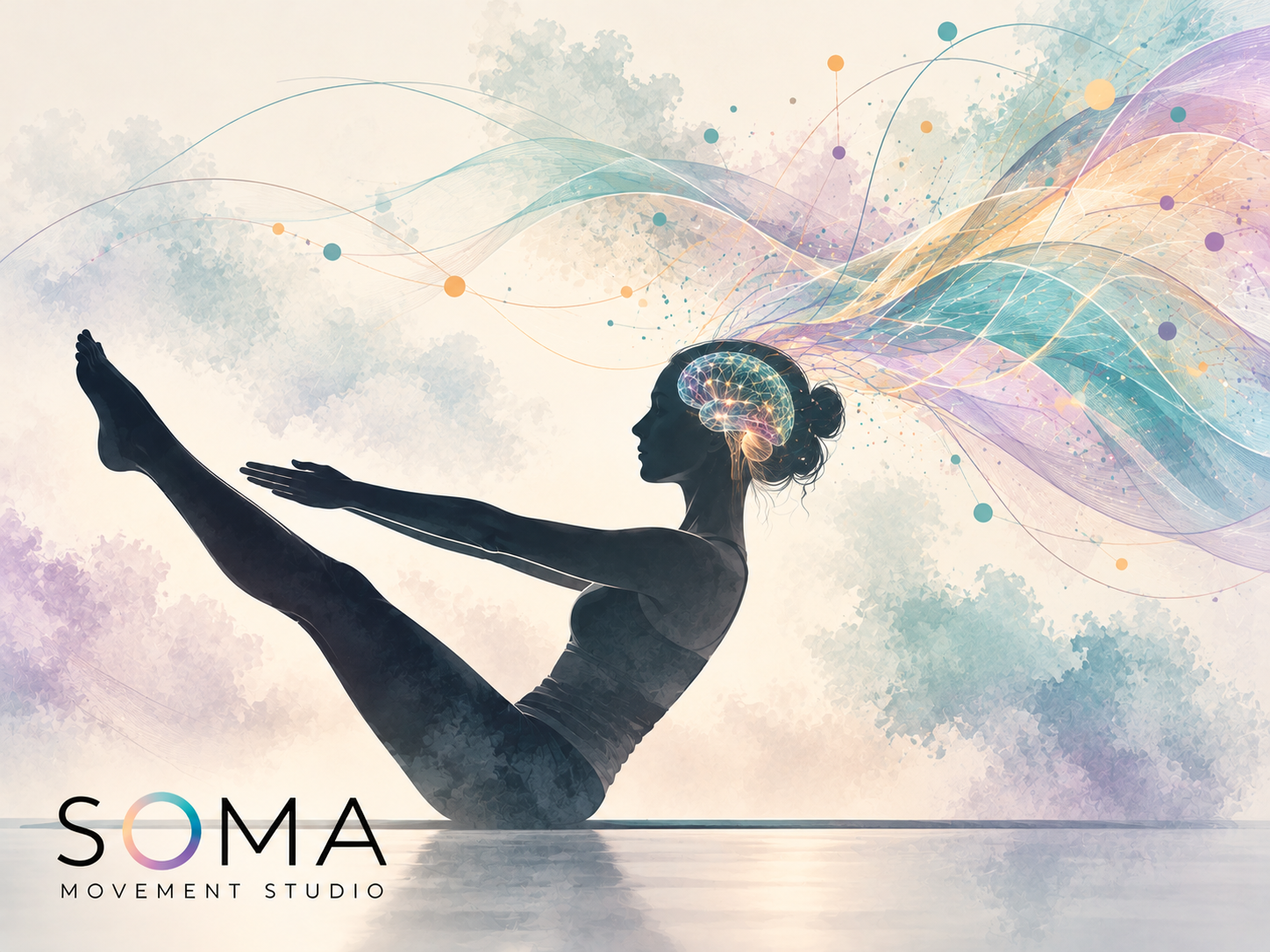
Moving Toward Mental Health
If you’re struggling with low mood, anxiety, or burnout, movement may feel like the last thing you want to do, but it doesn’t have to be dramatic or sweaty to count.
Try walking just 5,000 steps a day. Show up to a class, even if you move more slowly than usual. Let yourself feel what it’s like to breathe, stretch, and move with purpose. Make a connection with someone in the studio.
You don’t have to chase a dopamine high. You just have to move enough to let your nervous system recalibrate.
Because sometimes, the path out of the fog isn’t a sprint—it’s just a bit of movement.