Joe Pilates: The Inventor Behind the Method
Exploring the Patents and Innovations That Shaped Contrology
Most people know Joseph Pilates as the creator of a transformative method of movement—but fewer realize he was also a prolific inventor, with a deep curiosity for engineering solutions that could restore strength, alignment, and ease to the human body. Long before Pilates was a household name, Joseph was sketching, prototyping, and patenting equipment designed to support his revolutionary approach to fitness.
Pilates the Inventor: A Creative Vision Brought to Life
Joseph Pilates was not only a physical culturist but a true innovator. Drawing on his experiences in gymnastics, boxing, rehabilitation, and anatomy, he saw the need for equipment that would train the body in ways conventional exercise could not.
Between 1927 and 1945, he filed and received at least 26 patents in the United States and abroad, many of which formed the foundation for what we now call classical Pilates apparatus. These included designs for the Universal Reformer, the Cadillac (originally called the “Trapeze Table”), and the Wunda Chair—all still widely used in studios like SOMA today.
Accessing the Patents Today
Today, many of Joseph Pilates’ original patents are accessible online through the United States Patent and Trademark Office (USPTO) or public patent databases like Google Patents. These documents include hand-drawn diagrams and formal descriptions written in Joseph’s distinctive voice—part technical manual, part philosophical treatise.
You can explore some of his most well-known patents by searching:
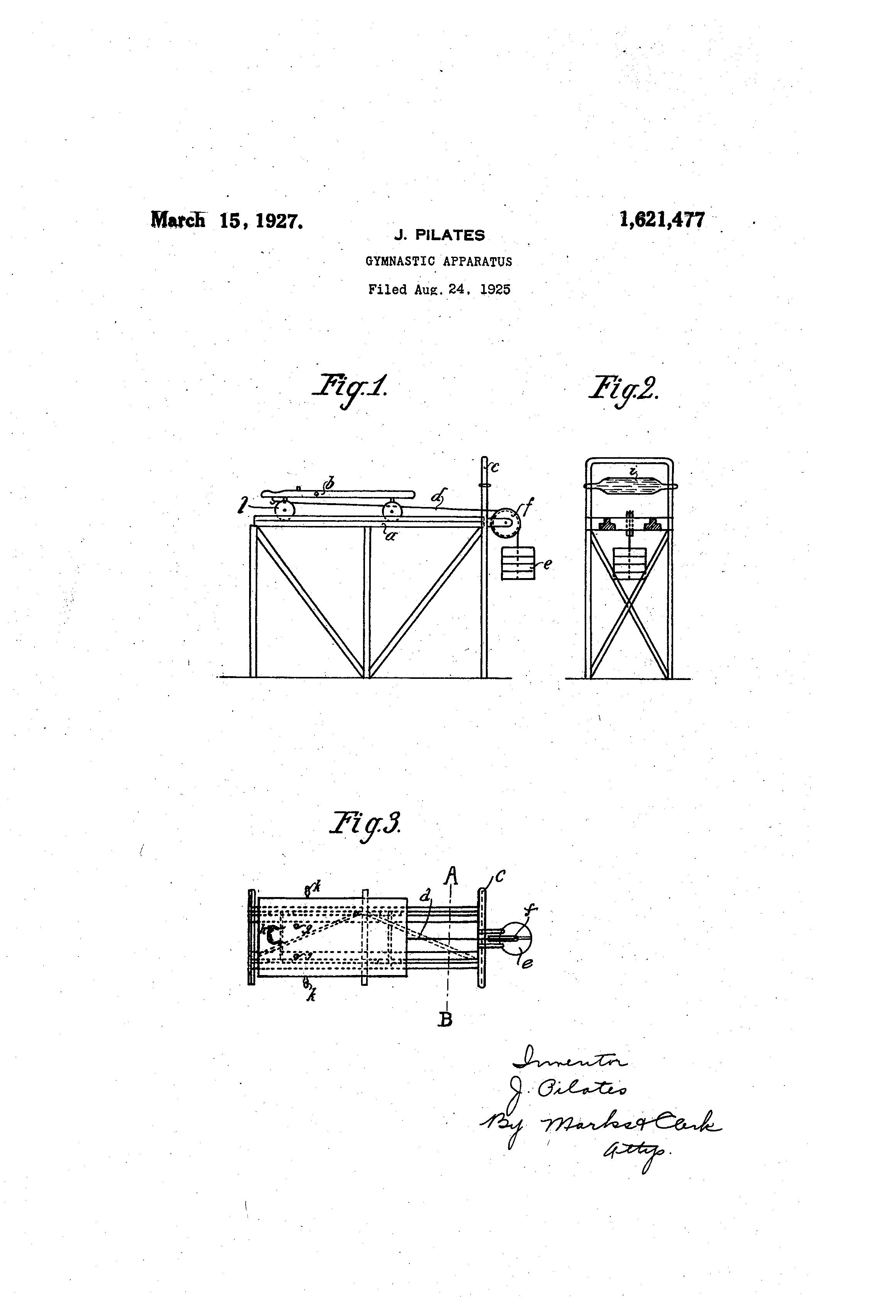
US Patent No. 1,621,477 – Apparatus for Exercising the Human Body (Reformer)
US Patent No. 2,219,848 – Bed for Corrective and Therapeutic Treatment (Cadillac)
US Patent No. 2,286,194 – Chair for Corrective Exercises (Wunda Chair)
These patents give insight not just into Pilates’ mechanical brilliance, but into his holistic understanding of the human body as a system of levers, springs, breath, and control.
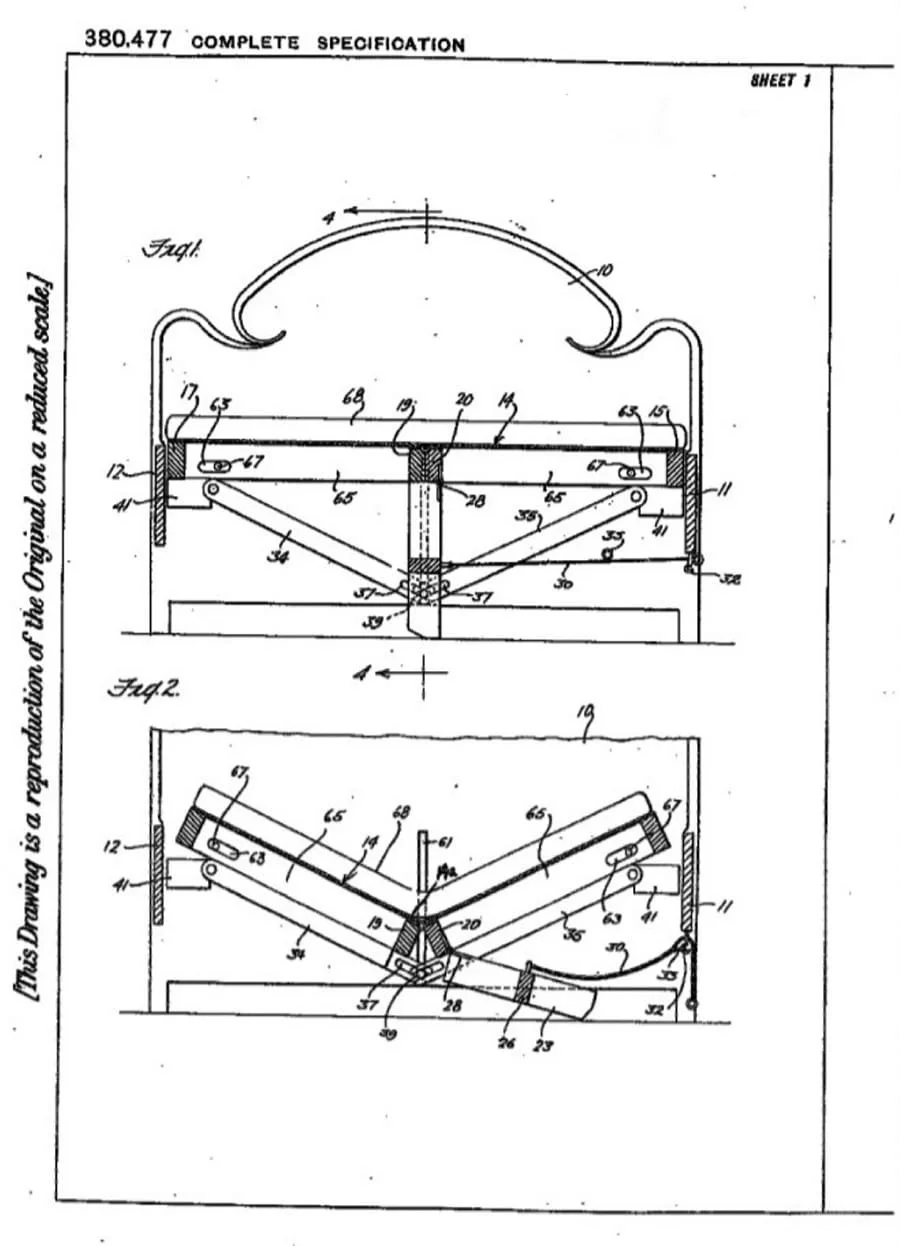
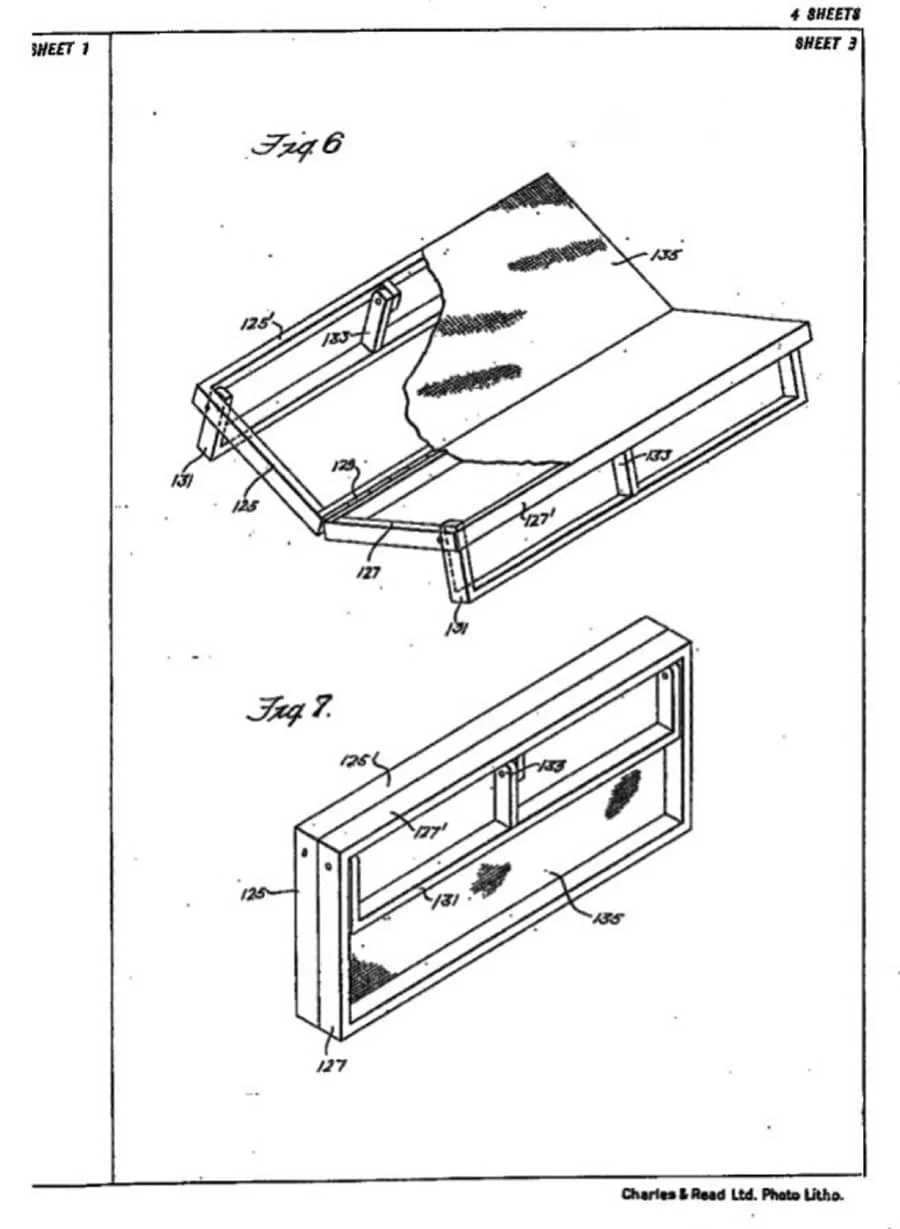
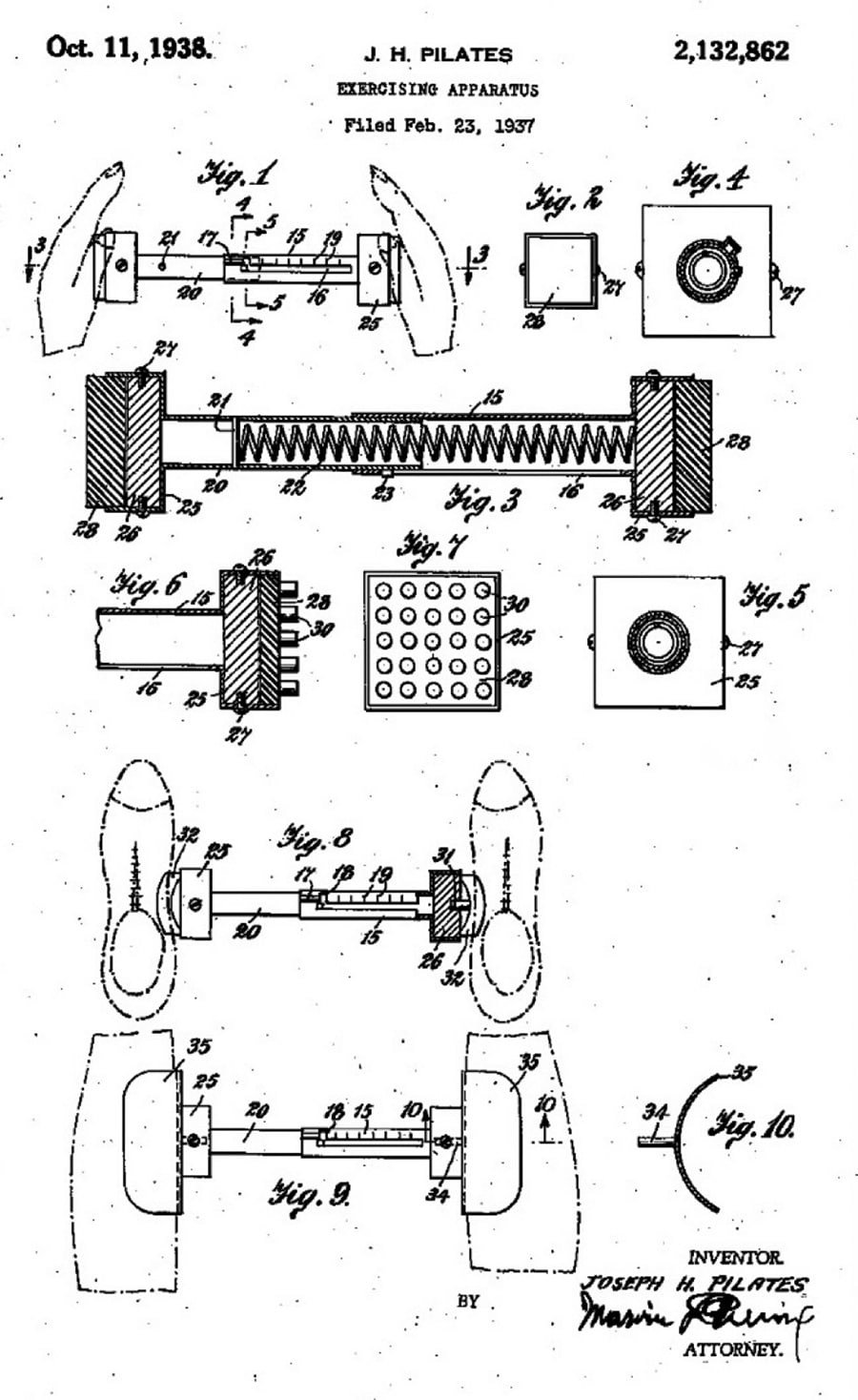
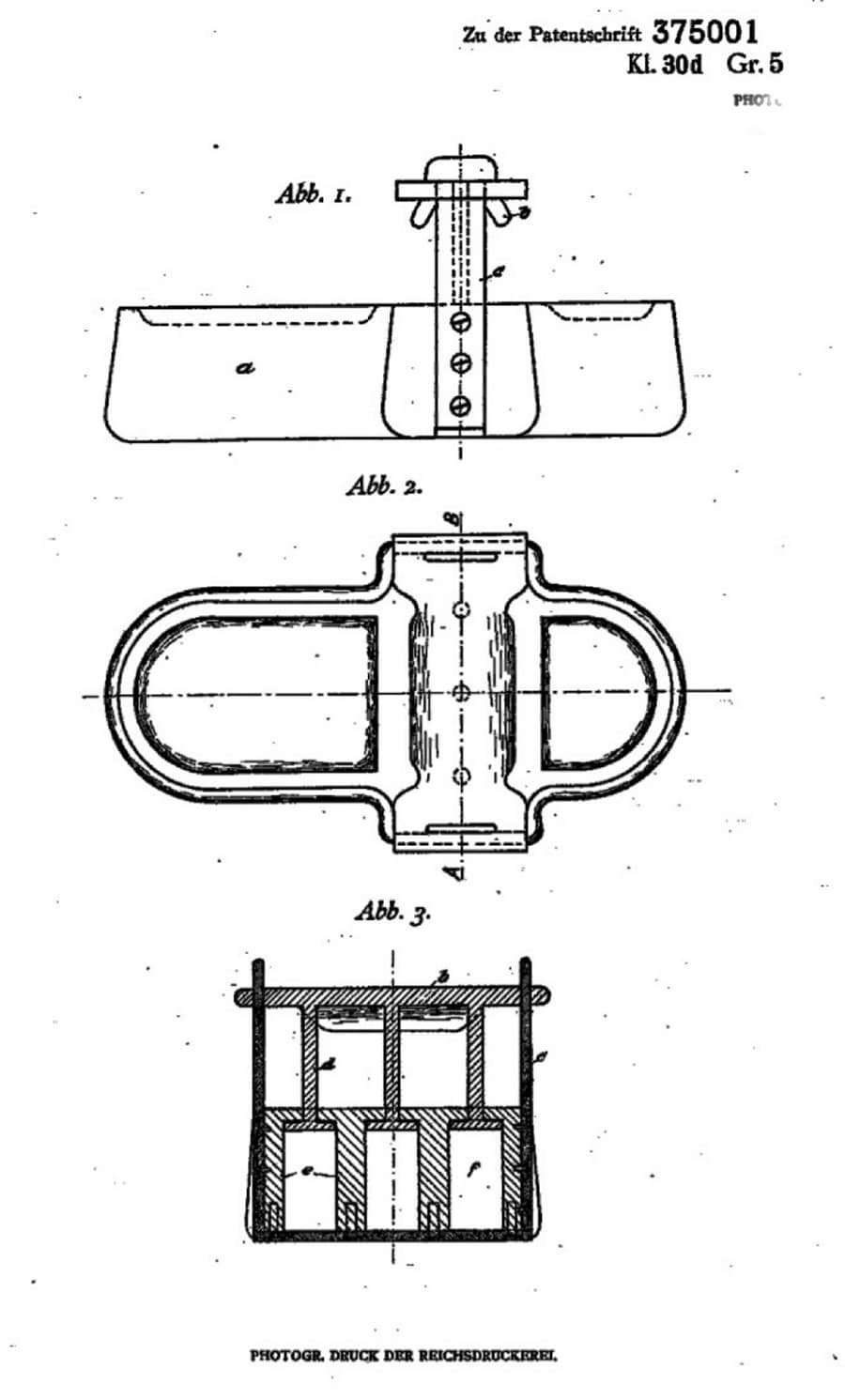
The Obscure and Unusual: Pilates’ Lesser-Known Inventions
In addition to his more famous creations, Joseph Pilates also designed a number of lesser-known apparatuses that reveal his obsessive attention to detail and deep desire to address the entire body—including areas most fitness systems ignored.
Some of his more obscure inventions include:
The Foot Corrector – A small, spring-loaded platform designed to strengthen the arches and promote proper foot alignment. Pilates believed healthy feet were essential to total-body health.
The Neck Stretcher (or Head and Neck Apparatus) – A head harness attached to springs, used to align the skull with the cervical spine and improve coordination of neck and postural muscles. This subtle but powerful tool is still in use at SOMA Movement Studio.
The Toe Corrector (or Bunion Stretcher) – A handheld device with spring resistance to train the intrinsic muscles of the toes and prevent collapsing arches and foot strain.
The Magic Circle (or Ring) – Originally made from a metal beer keg ring, this simple resistance device trains the inner thighs, chest, and shoulders—emphasizing Pilates’ principle of “working from the center.”
Many of these devices were handcrafted by Joseph himself, often using simple materials like wood, springs, leather straps, and metal tubing. His creativity knew no bounds when it came to solving biomechanical problems.
A Legacy of Innovation and Intelligence
Joseph Pilates wasn’t just a fitness instructor—he was a problem-solver, an artist of anatomy, and a passionate inventor whose creations were decades ahead of their time. His patents offer a fascinating window into the mind of a man who saw the body not as something to be pushed, but something to be tuned, restored, and refined.
At SOMA Movement Studio, we honor this inventive legacy by integrating both classical and contemporary tools into our sessions, always with the same intention Joe had: to help you move better, breathe deeper, and live with more ease and awareness.
Want to experience his genius firsthand?
Book a session with us and explore the method—not just the movement, but the machinery of transformation that he so thoughtfully designed.
Here is a list of some of Joe Pilates’ patents:
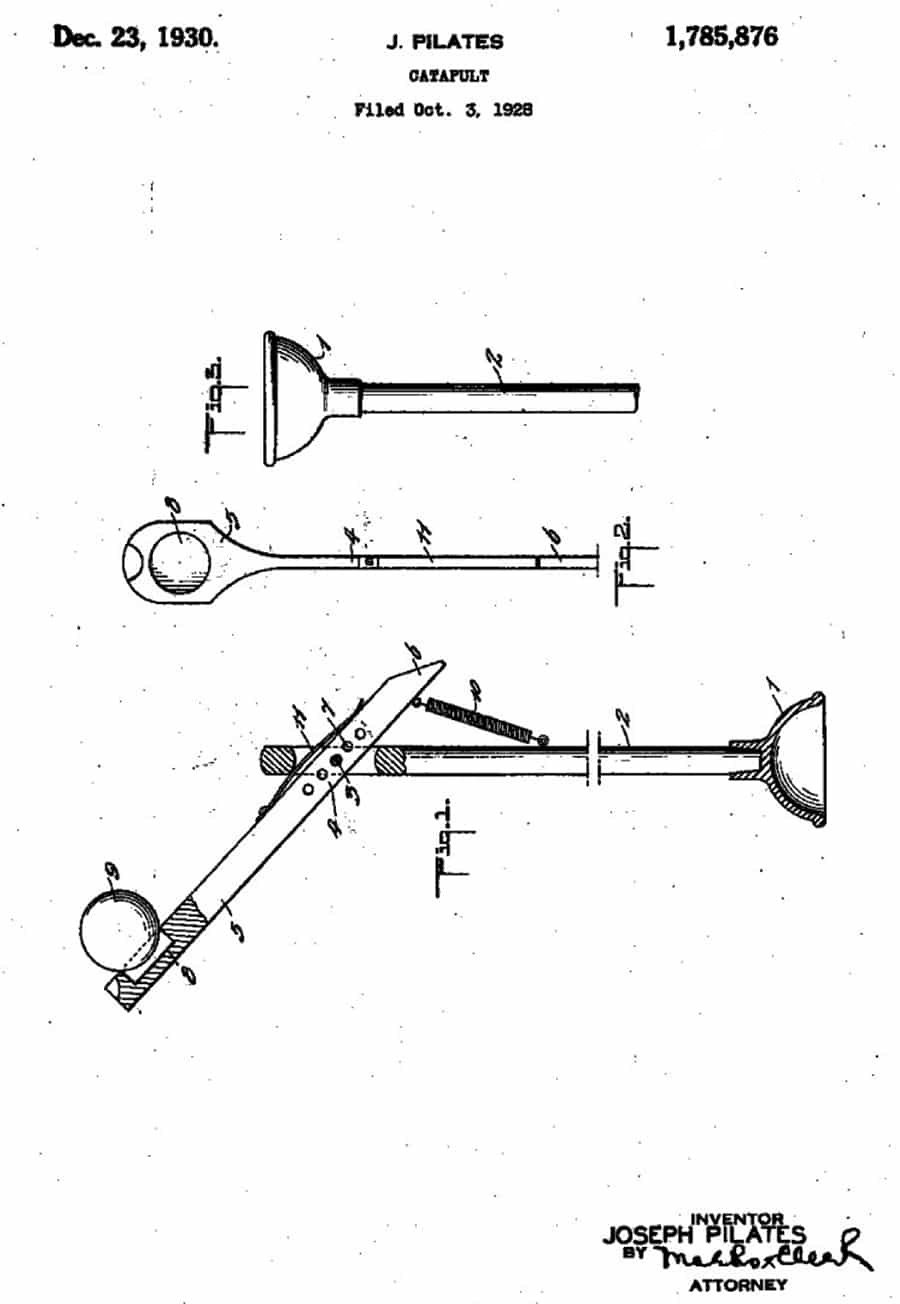
US1785876A – Catapult
Filed: October 3, 1928
Granted: December 23, 1930
Description: This early patent details a catapult device, reflecting Pilates' inventive exploration beyond exercise equipment.
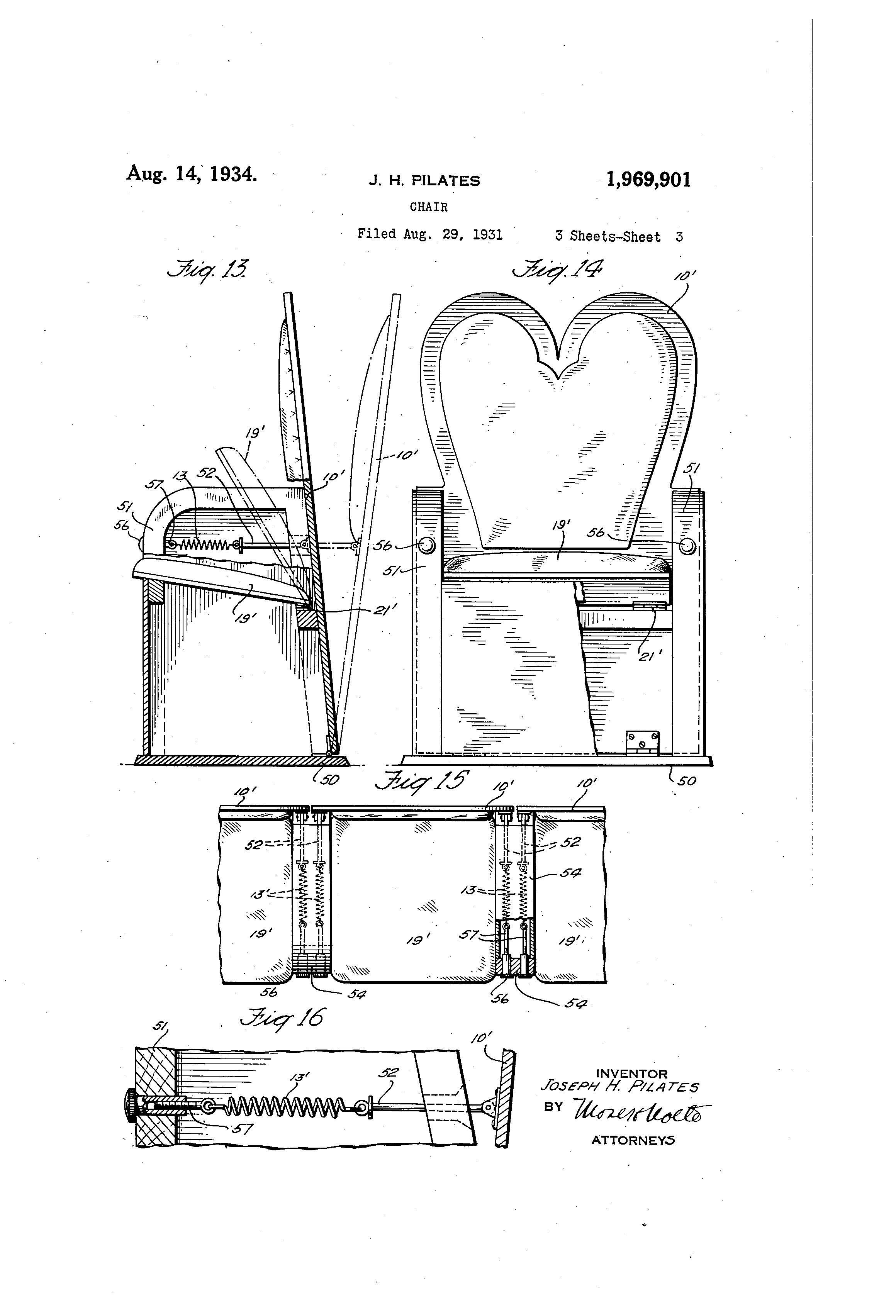
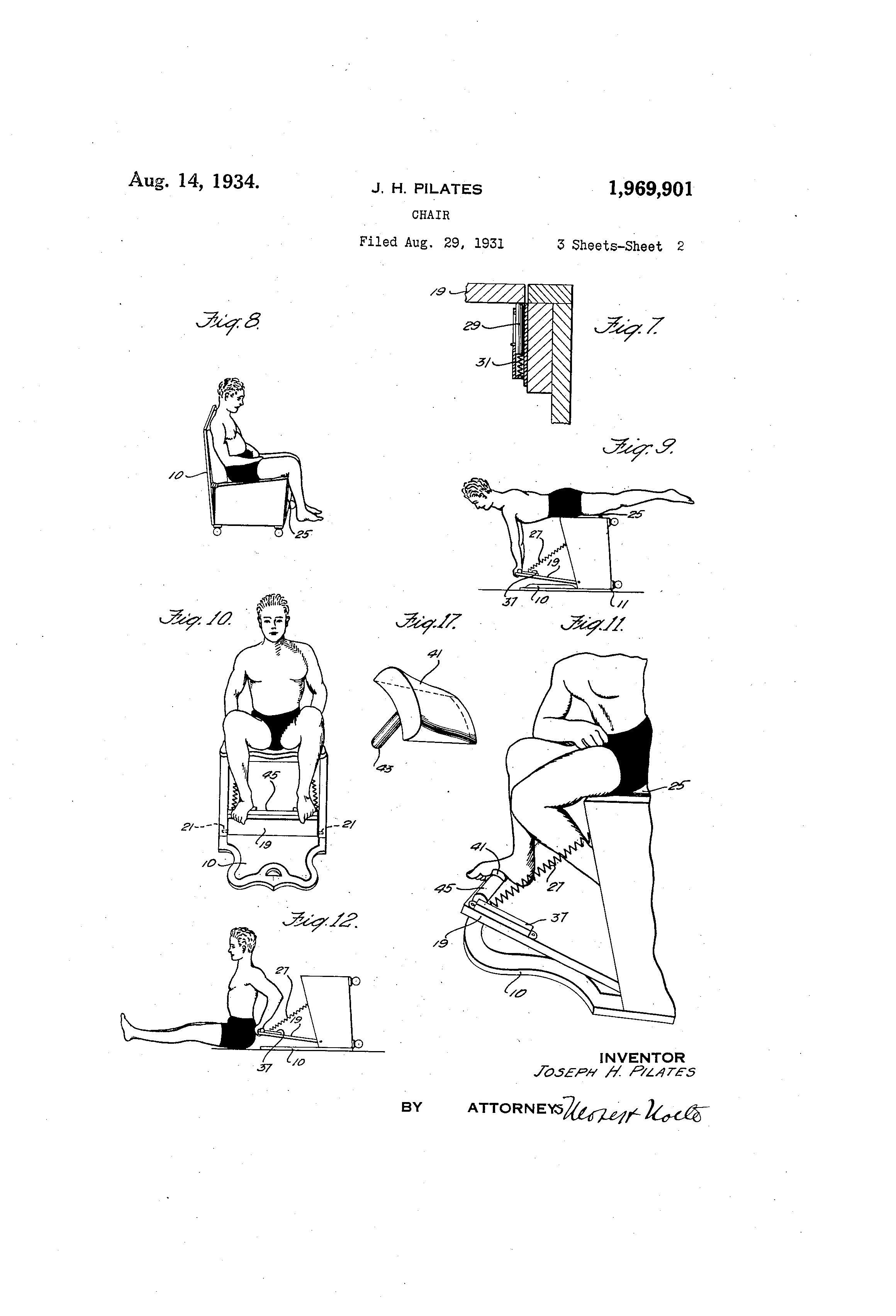
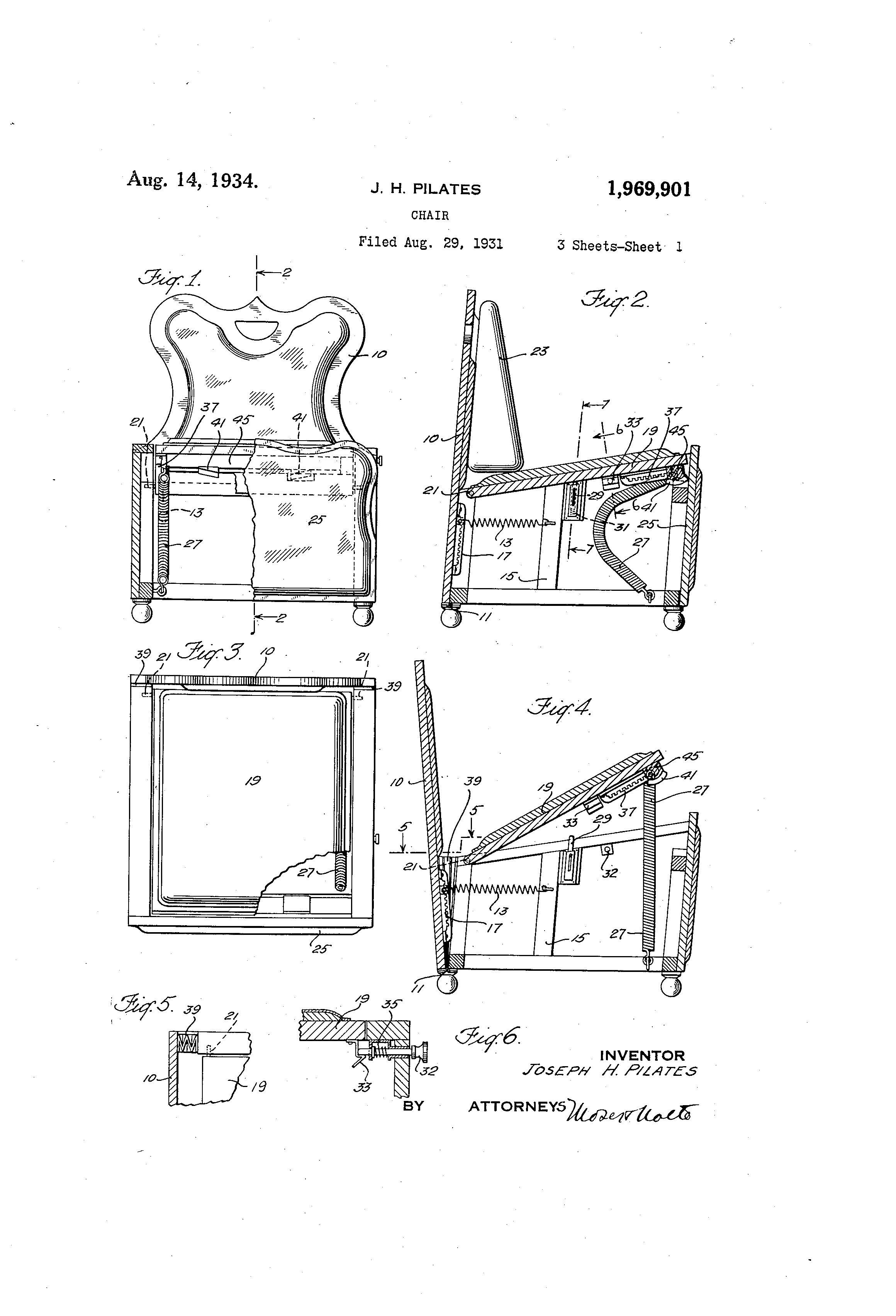
US1969901A – Chair
Filed: August 29, 1931
Granted: August 14, 1934
Description: This patent introduces a chair that can be turned on its back to function as an exercise apparatus, featuring a swingingly mounted seat with spring resistance.
US2075576A – Apparatus for Treating Human Bodies
Filed: March 31, 1932
Granted: April 6, 1937
Description: This invention outlines an apparatus aimed at therapeutic treatment, focusing on correcting bodily misalignments and promoting overall physical well-being.
US2141227A – Method and Apparatus for Correcting Bodily Defects and Deformities
Filed: October 21, 1935
Granted: December 27, 1938
Description: This patent presents a method and corresponding apparatus designed to address and correct various physical defects and deformities through targeted exercises.
US2163757A – Exercising Apparatus
Filed: December 21, 1936
Granted: June 27, 1939
Description: This patent introduces an apparatus intended for physical exercise, emphasizing controlled movements to enhance strength and flexibility.
US2209283A – Resilient Supporting Pad
Filed: May 11, 1937
Granted: July 30, 1940
Description: This invention describes a resilient pad designed to support the body during exercises, ensuring comfort and promoting proper alignment.
US2231283A – Method and Apparatus for Physical Conditioning
Filed: October 21, 1935
Granted: February 11, 1941
Description: This patent details a comprehensive method and apparatus aimed at enhancing physical conditioning through systematic exercises.
US2294788A – Exercising Apparatus
Filed: December 21, 1936
Granted: September 8, 1942
Description: This invention outlines an apparatus designed to facilitate a range of exercises, focusing on controlled resistance to improve physical strength.
US2357248A – Exercising Apparatus
Filed: May 11, 1937
Granted: August 29, 1944
Description: This patent introduces an apparatus aimed at providing a structured approach to physical exercise, emphasizing precision and control.
US2460978A – Exercising Apparatus
Filed: December 21, 1936
Granted: February 8, 1949
Description: This invention presents an apparatus designed to support various physical exercises, promoting overall fitness and well-being.
In addition to these U.S. patents, Joseph Pilates secured several international patents, including:
German Patent – Body Exercise Apparatus
Filed: Date not specified
Granted: Date not specified
Description: This patent details an apparatus for body exercises, showcasing Pilates' early innovations in exercise equipment.
German Patent – Foot Corrector
Filed: Date not specified
Granted: Date not specified
Description: This invention introduces a device aimed at correcting and strengthening the foot's musculature, emphasizing the importance of foot health in overall physical well-being.
German Patent – Bednasium
Filed: Date not specified
Granted: Date not specified
Description: This patent describes a bed designed for both sleeping and exercise, reflecting Pilates' holistic approach to integrating fitness into daily life.
These patents exemplify Joseph Pilates' dedication to developing equipment that supports his holistic approach to physical fitness, emphasizing controlled movements, proper alignment, and overall body conditioning.